
weekly update
Weekly AI Briefing: November 10, 2026
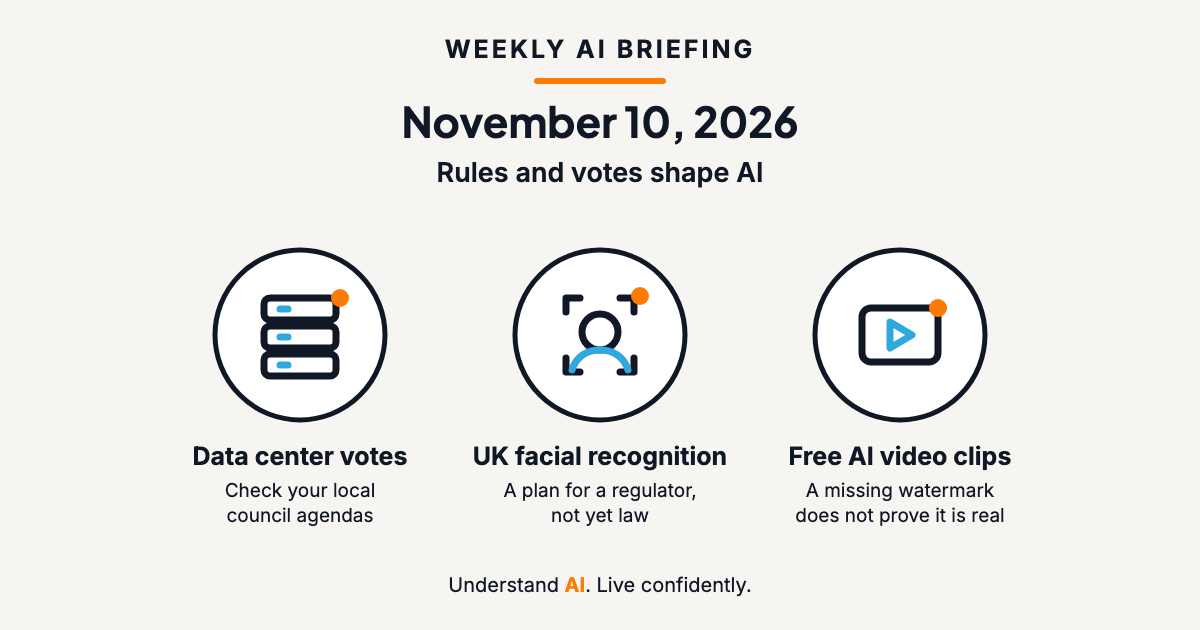
This week, voters, governments and tech companies each shaped where AI goes next.
1. US voters push back on data centers
What changed: On 3 November, voters favored limiting data centers in 40 of 41 local ballot measures, Ballotpedia reports. That included five full bans and three six-month moratoriums in Maine. The exception was Harwood, North Dakota.
Why this matters: Data centers, which power much of AI, use land, electricity and water. Local communities now have a vote.
Practical takeaway: Zoning decisions happen locally. Check your council agendas for data center proposals.
2. The UK plans a regulator for police facial recognition
What changed: On 4 November, the Home Office said it will create a statutory framework and an independent oversight body. The body could seek a court injunction to stop forces breaking the rules. A separate code is planned for businesses such as shops.
Why this matters: Current rules are a patchwork. The government says tools must be independently tested for bias by age, gender or race.
Practical takeaway: This is a plan, not yet law. Legislation still has to follow.
3. Google puts free AI video clips into Vids
What changed: Google released Gemini Omni 1.2 Flash, which makes clips up to 15 seconds and supports follow-up edits. In Google Vids, anyone with a Google account gets three free 15-second videos a month.
Why this matters: Realistic video is getting cheap to make. Google adds an invisible SynthID watermark to its outputs.
Practical takeaway: Gemini, Search and Chrome can check for Google’s watermark. No watermark does not prove a clip is real.
Weekly mindset shift
Better question: “Who decides how this AI is built, used or watched?”
Practical filter: Votes and laws move slower than launches. Follow both.
Have a story for next week’s briefing, or a question? Reply to this newsletter or visit Contact.