
weekly update
Weekly AI Briefing: July 28, 2026
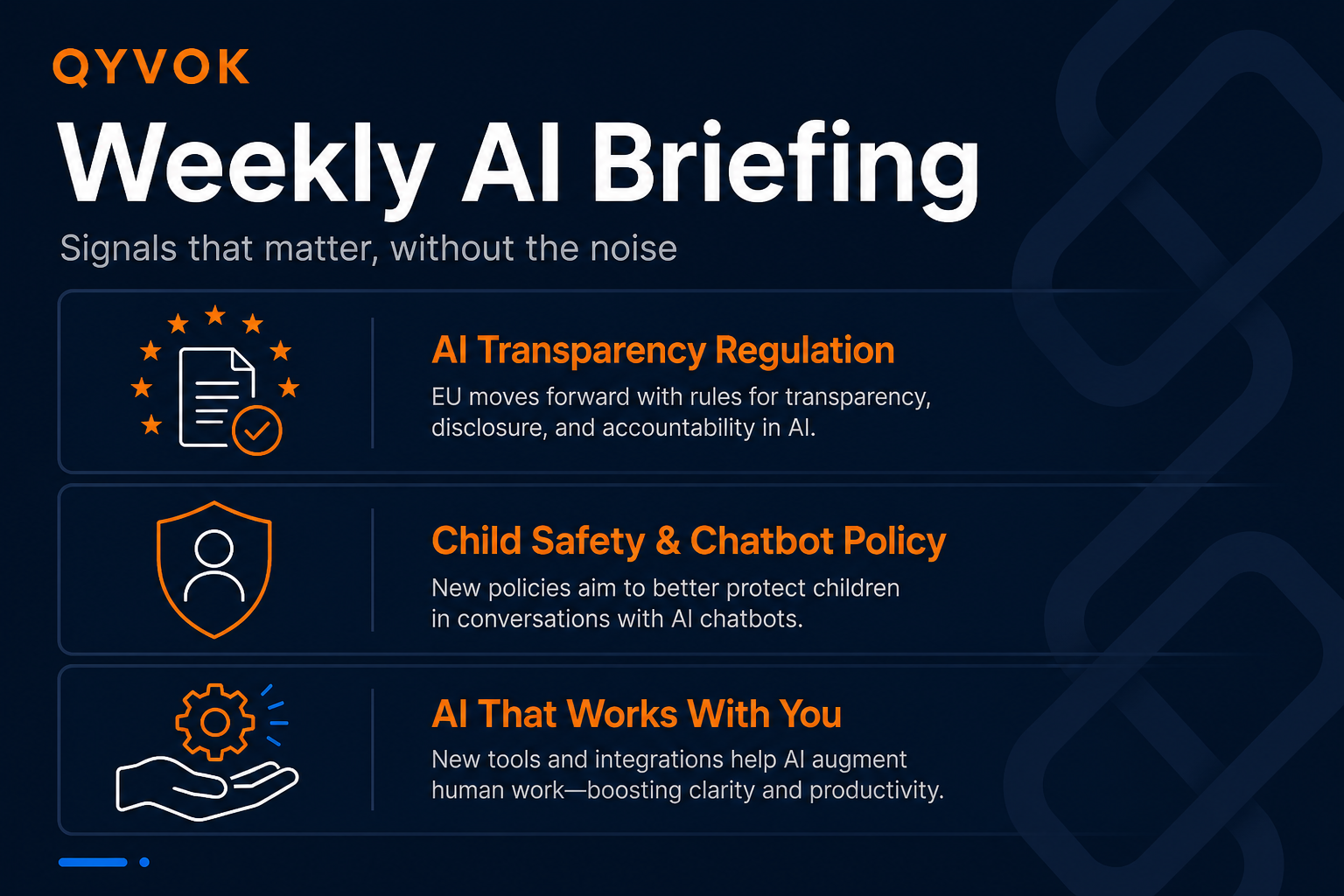
Three stories from the past week, with context you can use quickly.
1. Europe’s AI transparency rules arrive on August 2
- What changed: The EU AI Act transparency obligations apply from 2 Aug 2026.
- Official basis: Article 113 (application date) and Article 50 (transparency duties), plus July 2026 Commission guidance.
- What users should expect: More explicit labels such as “AI-generated” and clearer non-human chatbot disclosures.
- Why this matters globally: Large AI providers often standardize behavior across regions, not only EU markets.
2. US states keep moving faster than Congress on chatbot safety
- Federal reality: There is still no single US federal chatbot law in force.
- State reality: The FPF tracker shows ~100 chatbot-specific bills across 34 states.
- Common policy direction: Non-human disclosure, minor safeguards, and tighter data-use limits.
- Markey bill status: S.4199 Youth AI Privacy Act is introduced and referred to committee, not enacted.
- Practical takeaway: For families with teenagers, protections depend heavily on your state, not one national standard.
3. The biggest usage study yet says AI helps more than it replaces
- Dataset size: Google analyzed 15 million anonymized conversations in ATLAS.
- Main signal: AI is being used more as assistive support than full job replacement.
- Notable detail: Use appears across unexpected roles, including hands-on technical work.
- Important caveat: This is a company-published dataset, so treat it as informative, not definitive.
- Reader takeaway: Avoid extreme narratives. Track where AI adds value while preserving human judgement.
Weekly mindset shift
- Better question: “Which decisions must stay human?”
- Practical filter: “Where can AI help without weakening my judgement?”
Have a story you think belongs in next week’s briefing, or a question about something you read here? Reply to this newsletter or visit Contact.